In the vast expanse of the cosmos, humanity's quest to uncover the secrets of the universe continues to push boundaries and inspire awe. Space exploration, once deemed the domain of science fiction, has evolved into a dynamic field driven by cutting-edge technology and global collaborations. This collective endeavor not only broadens our understanding of the universe but also ignites curiosity and innovation on Earth.
At the heart of current space exploration efforts lies an intricate web of projects and collaborations that span continents and disciplines. These initiatives aim to address fundamental questions about the universe's origins, the possibility of life beyond Earth, and the mechanics of celestial bodies. Through a combination of governmental space agencies, private enterprises, and international partnerships, humanity is poised to achieve unprecedented milestones.
NASA, the European Space Agency (ESA), and the Russian space agency Roscosmos, to name a few, continue to lead ambitious programs that unveil the mysteries of space. Notably, NASA's Artemis program is spearheading efforts to return humans to the Moon and establish a sustainable presence there by the end of this decade. This program sets the stage for the long-term human exploration of Mars, acting as a crucial stepping stone to the Red Planet.
The James Webb Space Telescope (JWST), launched in December 2021, represents another monumental leap forward in our quest to understand the universe. As the most powerful space telescope ever constructed, JWST enables scientists to peer billion years back in time, providing unprecedented insights into the formation and evolution of galaxies, stars, and planetary systems. The telescope also enhances our search for habitable planets, offering clues to the age-old question of whether life exists beyond Earth.
In tandem with governmental efforts, private companies like SpaceX and Blue Origin are propelling space exploration into uncharted territories. SpaceX's Starship program, with its reusable spacecraft designed for deep space missions, aims to make space travel more accessible and economically viable. Meanwhile, Blue Origin is focusing on establishing a presence in low Earth orbit, facilitating research and commerce in space.
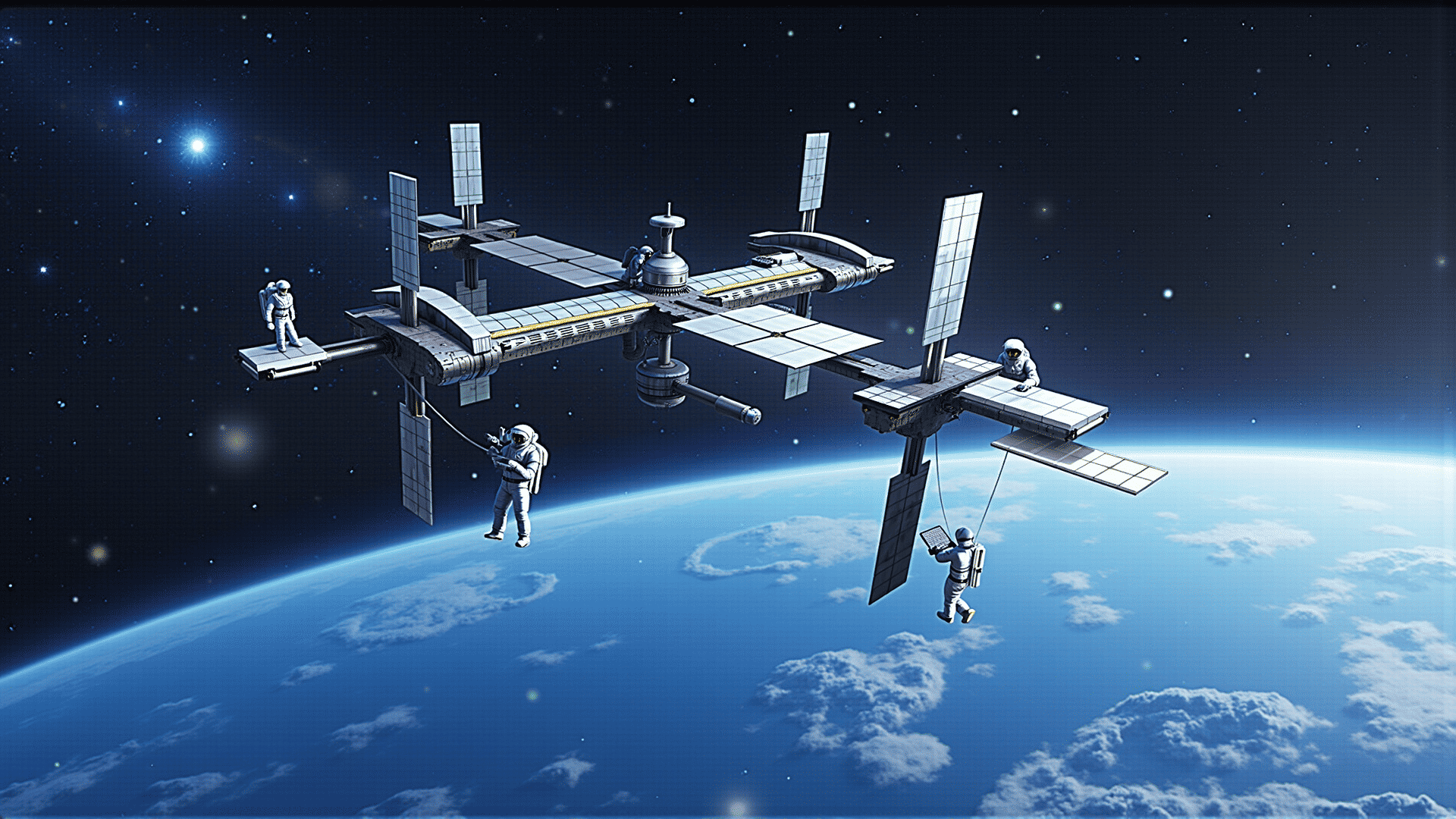
International collaborations are equally pivotal in advancing space exploration. The International Space Station (ISS) remains a testament to the power of global cooperation, serving as a unique platform for scientific research and technological innovation. Moreover, the Lunar Gateway initiative, involving partners such as NASA, ESA, and the Canadian Space Agency, is set to construct a space station orbiting the Moon, further enabling deep-space exploration and scientific discovery.
While the quest for knowledge drives these scientific endeavors, space exploration also holds the potential to address pressing challenges on Earth. Technological advancements derived from space research often translate into practical applications in fields such as medicine, telecommunications, and environmental monitoring. Furthermore, the collaborative spirit of space exploration fosters international goodwill and underscores our shared responsibility in safeguarding the future of our planet.
As we stand on the brink of a new era in space exploration, the possibilities are as infinite as the universe itself. Each discovery brings us closer to understanding our place among the stars and inspires us to dream beyond the horizon. Through relentless curiosity and boundless innovation, humanity's exploration of space continues to blaze a trail of wonder and promise for generations to come.